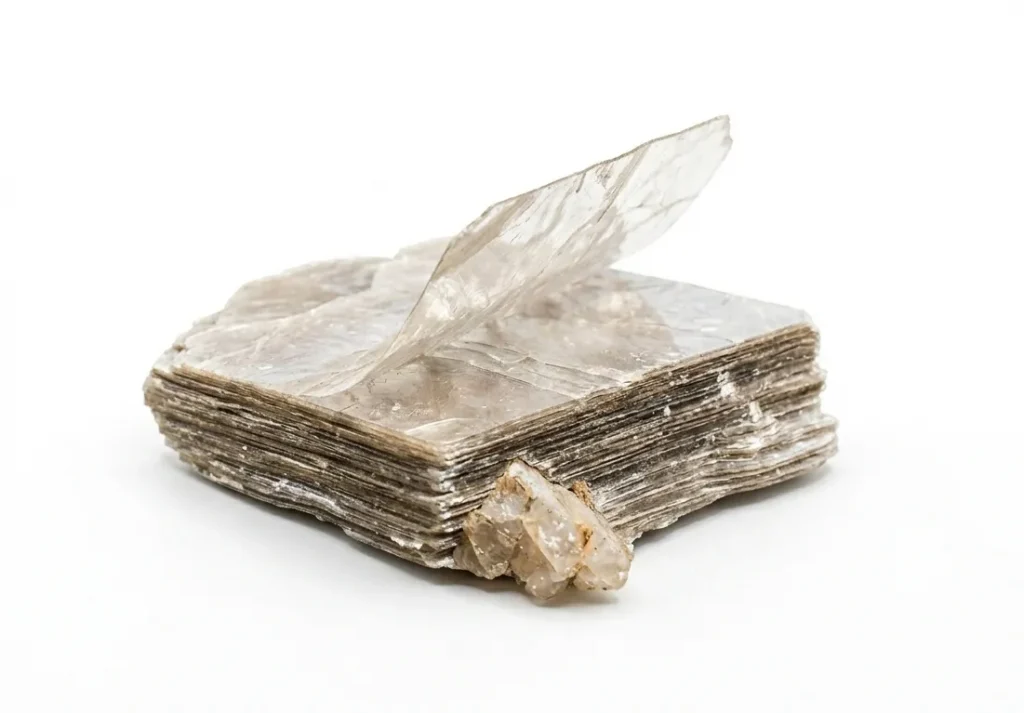
Mica is a generic term for a group of naturally occurring complex aluminosilicate minerals defined by a unique sheet-like structure and monoclinic crystals. Often called a “wonder mineral,” it is celebrated for a remarkable cleavage that allows it to be easily split into optically flat, flexible films that remains tough and elastic even under extreme conditions. Mica possesses an unparalleled combination of chemical, physical, and thermal properties—including a high dielectric strength and the ability to withstand temperatures ranging from 600°C to 1000°C—making it an irreplaceable electrical insulator in modern high-tech industries. These traits are particularly critical in the Electric Vehicle (EV) sector for battery thermal management and fire barriers.
Furthermore, Beyond its thermal capabilities, Mica is prized for its chemical stability, remaining virtually immune to the effects of water, acids, alkalis, and oils. This ensures long-term durability in the harshest industrial environments. At CLB EXIM, we leverage our deep expertise to source high-purity mica from premium origins in Jharkhand and Rajasthan, processing it into various high-performance forms. Our product range spans from fine Mica Powder, used in specialized coatings and plastics to provide UV protection, to precision Fabricated Mica Components and Splitting-based Mica Sheets designed for high-voltage electrical equipment. Unlike many other minerals, Mica’s mechanical flexibility allows it to be punched, cut, or fabricated into intricate shapes while maintaining its protective qualities, making it the foundational material for sectors that demand absolute reliability under pressure.
Key Properties of Mica
- Physical Properties
- Laminar Structure: The mineral has flat, plate-like crystals. These layers can be separated into films as thin as $1\mu m$ (one micrometer) without breaking.
- Flexibility and Toughness: Even though it is a mineral, thin mica sheets are elastic and flexible. They can bend and return to their original shape, as long as they aren’t folded too much.
- Transparency: In its pure form (Muscovite), mica is nearly completely transparent. This quality makes it useful for applications that need visibility and heat resistance.
- Optical Flatness: When mica is split, the surfaces are naturally flat at a molecular level. This is why mica is often used as a substrate for atomic force microscopy.
2. Thermal Properties
- Thermal Stability: Mica can survive temperatures between 600°C and above 1000°C (depending on types, Phlogopite has greater resistance) without melting or losing its insulating properties.
- Low Thermal Conductivity: Mica is a superior thermal insulator, hence used as supports for heating elements in home appliances such as toasters.
- Non-Flammability: Mica is completely non-flammable and does not emit toxic gases even when exposed to direct flame.
3. Electrical Properties
- High Dielectric Strength: It can withstand high voltages, normally between 1000 to 2000 volts per mil of thickness, without any electrical breakdown.
- Low Power Factor: It has an extremely low loss tangent, indicating that it absorbs very small amounts of energy when it is subjected to an AC electric field. This makes it highly suited for capacitors operating at high frequencies.
- Insulation Resistance: It can resist electricity even at very high temperatures.
4. Chemical Properties
- Corrosion Resistance: It is virtually immune to the effects of water, most acids, alkalis, and conventional solvents.
- Weathering Resistance: Mica does not oxidize or deteriorate when exposed to sunshine (UV rays) or moisture. Therefore, it can be used in the formulation of stable components in industrial coatings and paints.
- Hydrophobic Nature: Mica does not absorb water, which helps maintain its electrical insulation properties even in humid conditions.
Types of Mica
Muscovite (Potassium Mica)
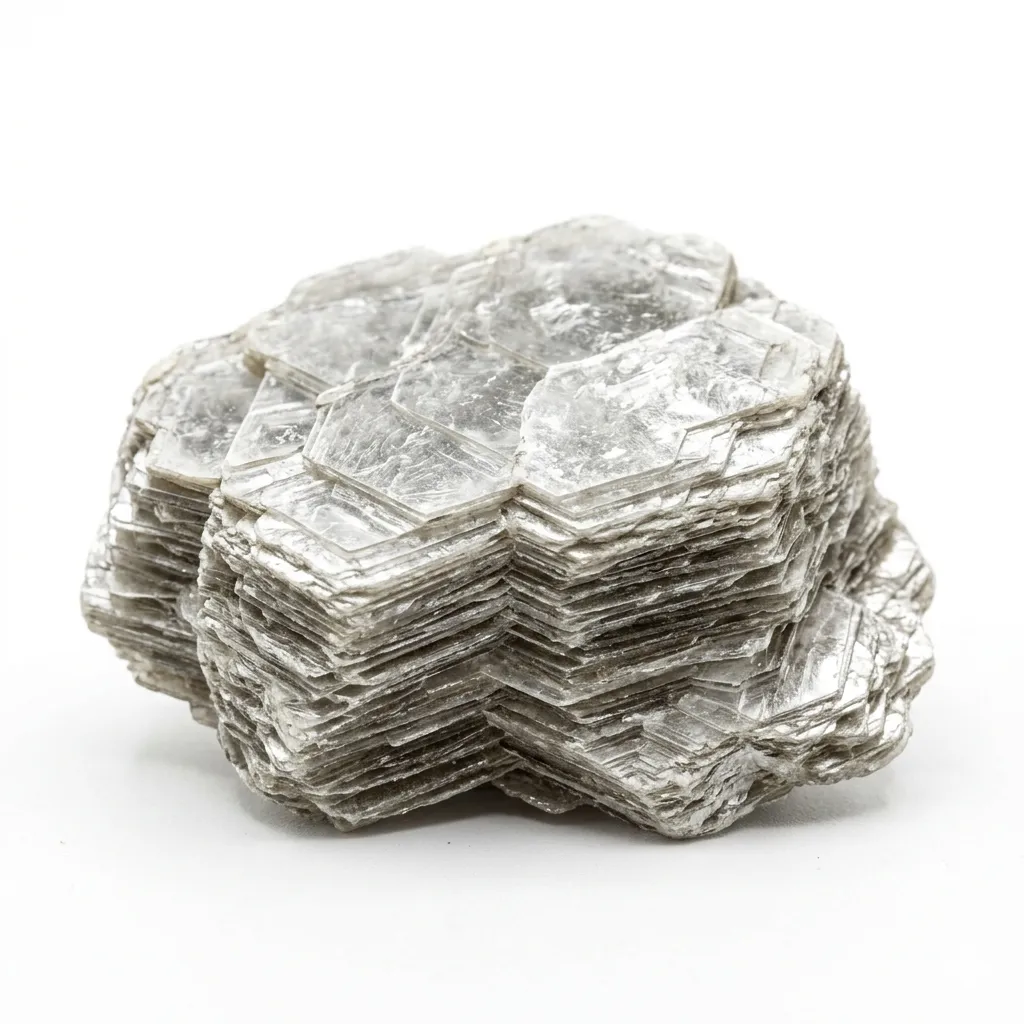
Muscovite, commonly known as Potassium Mica due to its high potassium content, is the most abundant and commercially important variety of mica, belonging to the sheet silicate group with the chemical formula KAl₂(AlSi₃O₁₀)(OH)₂. It is a hydrous aluminum silicate composed of potassium, aluminum, silicon, oxygen, and hydroxyl, and typically forms in granitic pegmatites and metamorphic rocks such as schists and gneisses, with major deposits found in India.
Muscovite is characterized by its perfect cleavage and layered structure, which allows it to be split into extremely thin, transparent, flexible sheets that exhibit a pearly to vitreous (glassy) luster and colors ranging from colorless to silvery or light green. These sheets can withstand high temperatures up to about 600°C without losing strength, making muscovite an excellent electrical insulator widely used in electrical equipment like motors, transformers, and capacitors. In addition to its industrial applications, its smooth texture and natural shimmer make it valuable in paints, plastics, joint compounds, and cosmetics such as eyeshadows and lipsticks, where it provides durability, smoothness, and a glittering appearance.
Phlogopite (Magnesium Mica)
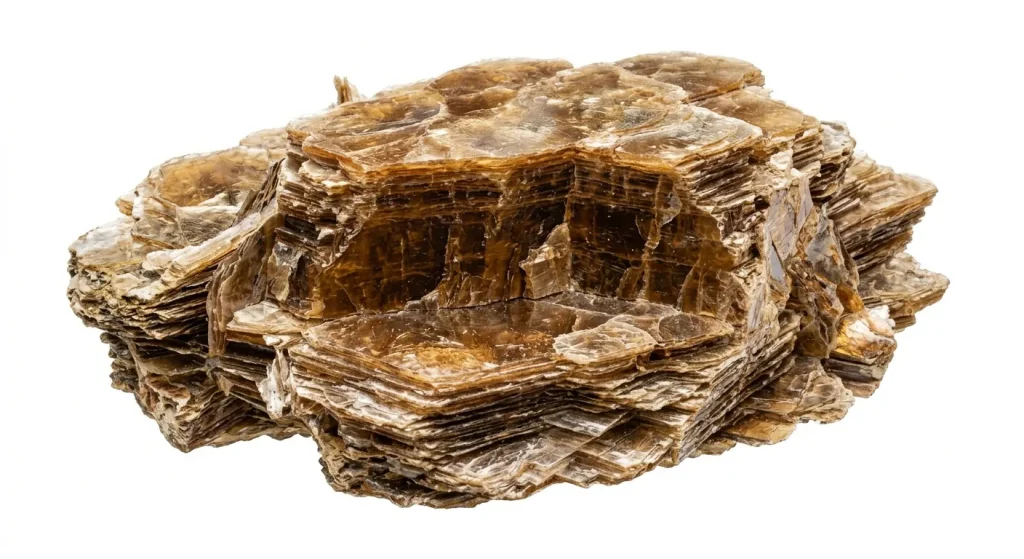
Phlogopite, commonly known as Magnesium Mica or Amber Mica, is an important mica mineral belonging to the ferromagnesian group, recognized for its high magnesium content and exceptional heat resistance. Chemically, it is a hydrous potassium magnesium aluminum silicate in which magnesium largely replaces iron, giving it characteristic colors ranging from light yellow and golden brown to bronze, copper-like, or dark brownish-black shades. It typically forms in magnesium-rich geological environments such as dolomitic limestones, ultrabasic rocks, and metamorphic rocks like marble. Like all micas, phlogopite has a layered (sheet) structure with perfect cleavage, allowing it to be easily split into thin, flexible, and elastic sheets.
However, it is slightly softer than muscovite but significantly more resistant to heat. Its most notable property is its ability to maintain physical and chemical stability at extremely high temperatures of up to about 1000°C (1832°F), making it highly suitable for use in extreme environments where other materials may fail. Although its electrical insulation properties are somewhat lower than muscovite, its superior thermal durability makes it widely used in high-temperature applications such as furnace linings, heating elements, thermal insulation systems, fire-resistant materials, gaskets, and components in the automotive and aerospace industries, where both heat resistance and reliability are critical.
Lepidolite (Lithium Mica)
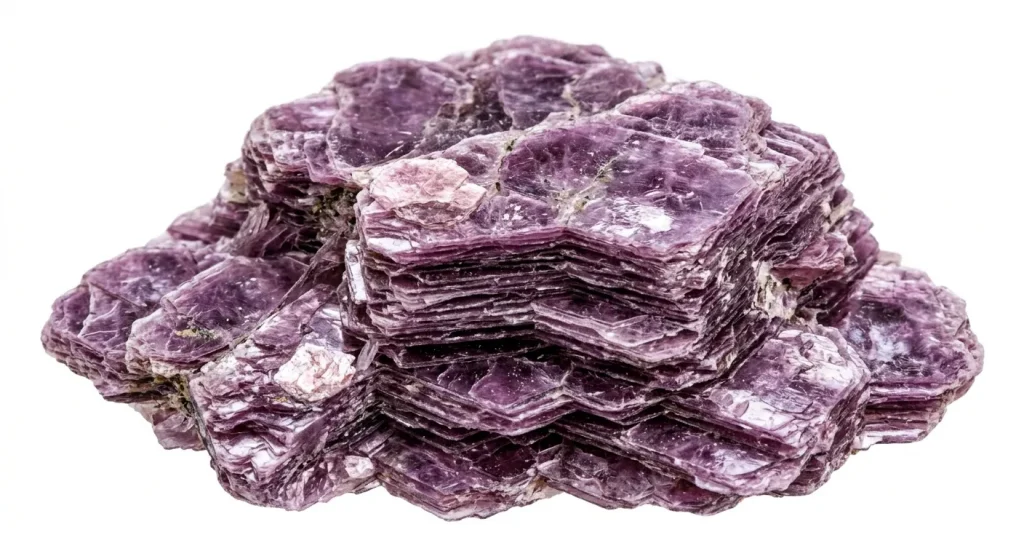
Lepidolite, commonly known as Lithium Mica, is a rare and distinctive member of the mica group belonging to the light mica category, valued primarily for its high lithium content and striking coloration that ranges from pale lilac and pink to deep violet or rose hues, often due to trace amounts of manganese. Chemically, it is a lithium aluminum silicate that may also contain potassium and fluorine, and it typically forms in lithium-rich granitic pegmatites alongside minerals such as quartz, feldspar, tourmaline, and spodumene. Like other micas, lepidolite has a sheet-like (phyllosilicate) structure with perfect basal cleavage, allowing it to be split into thin flakes.
However, it is generally softer, more brittle, and often occurs in scaly or granular masses rather than large sheets like muscovite or phlogopite. Although it is not widely used for electrical insulation, its primary industrial importance lies in being a major source of lithium, which is essential for manufacturing rechargeable batteries, glass, and ceramics, where it also acts as a flux to lower melting temperatures and improve thermal shock resistance. In addition to its industrial significance, lepidolite’s shimmering pearly luster and vibrant colors make it highly popular for decorative stones, ornamental carvings, and gemstones.
Biotite (Black Mica)
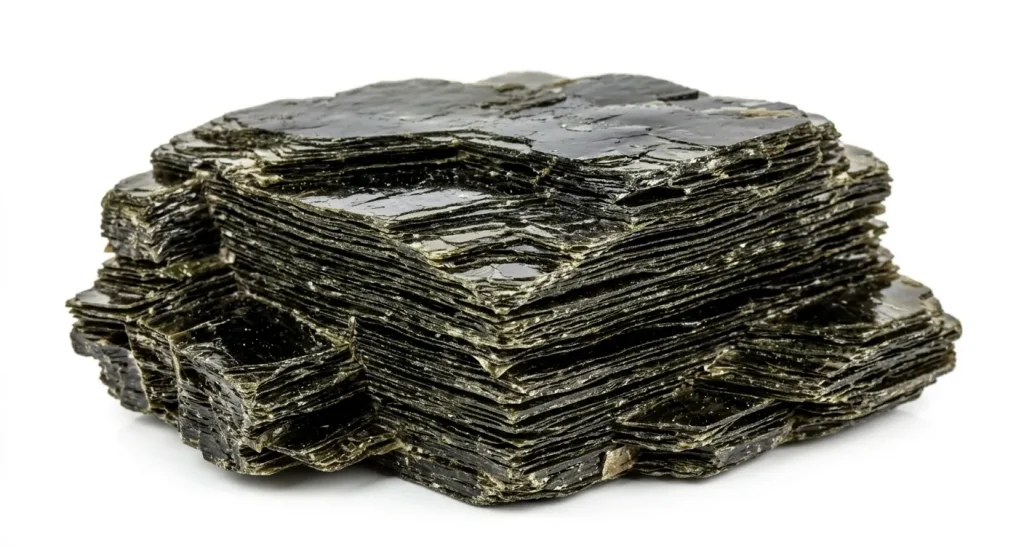
Biotite, commonly known as Black Mica, is a widely distributed mineral belonging to the dark, ferromagnesian group of micas, characterized by its high iron and magnesium content, which gives it a color ranging from dark brown and greenish-black to deep black. Chemically, it is a complex potassium magnesium iron aluminum silicate and a major rock-forming mineral commonly found in igneous and metamorphic rocks such as granite, basalt, and schist, making it one of the most abundant micas in the Earth’s crust. Like other micas, biotite has a layered (sheet) structure with perfect basal cleavage, allowing it to be split into thin sheets.
However, these sheets are less elastic and more prone to breaking compared to muscovite. It is typically opaque to translucent and exhibits a vitreous to slightly pearly luster. Due to its high iron content, biotite is slightly conductive, which reduces its electrical insulating properties, making it unsuitable for high-grade electrical applications. Instead, its commercial use is limited to applications such as fillers in construction materials like asphalt shingles, roofing products, and specialty paints, where it provides a dark, shimmering appearance. Despite its limited industrial use, biotite holds great importance in geology, particularly in studying rock formation, mineral composition, and determining the age of rocks through techniques such as argon-argon dating, helping scientists understand the conditions under which rocks were formed.
Kinds of Mica
Sheet Mica
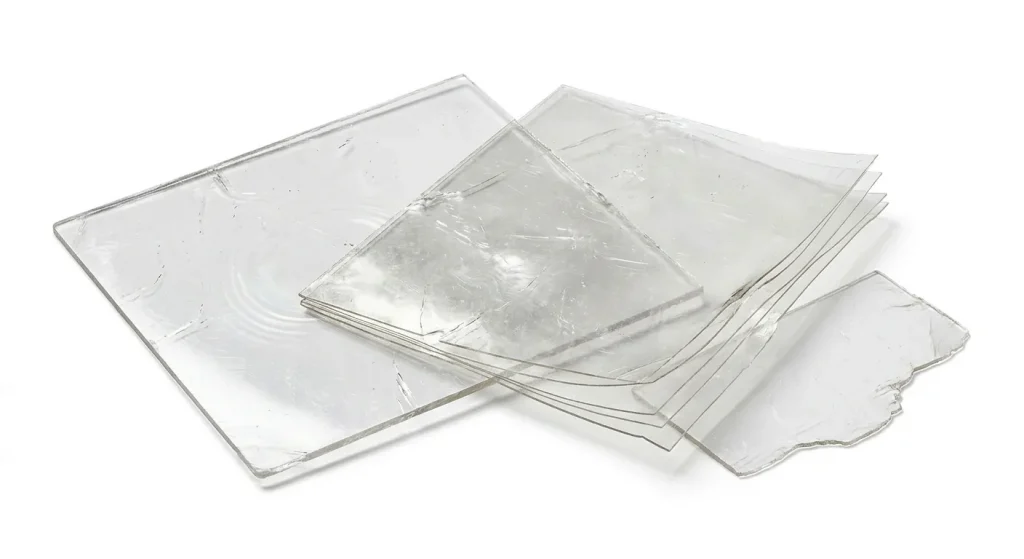
Sheet mica is defined as the highest quality type of natural mica that is obtained in the form of large, flat, and intact sheets directly from the mine. It is defined by the fact that it can be split into very thin, transparent, and flexible sheets without breaking due to the presence of perfect cleavage. These sheets are normally clear but may be slightly colored depending on the type of mineral, normally muscovite. Sheet mica is normally characterized by the presence of a smooth surface with no flaws and high mechanical strength.
Sheet mica is characterized by the presence of high dielectric properties, high heat resistance, and chemical stability. This is the main reason why sheet mica is very important and is mainly used in the electrical and electronic industry. Sheet mica is mainly preferred over other forms of mica, such as scrap and ground mica, due to its high cost and limited availability. This is due to the fact that large and intact sheets with no flaws are very rare.
Block Mica
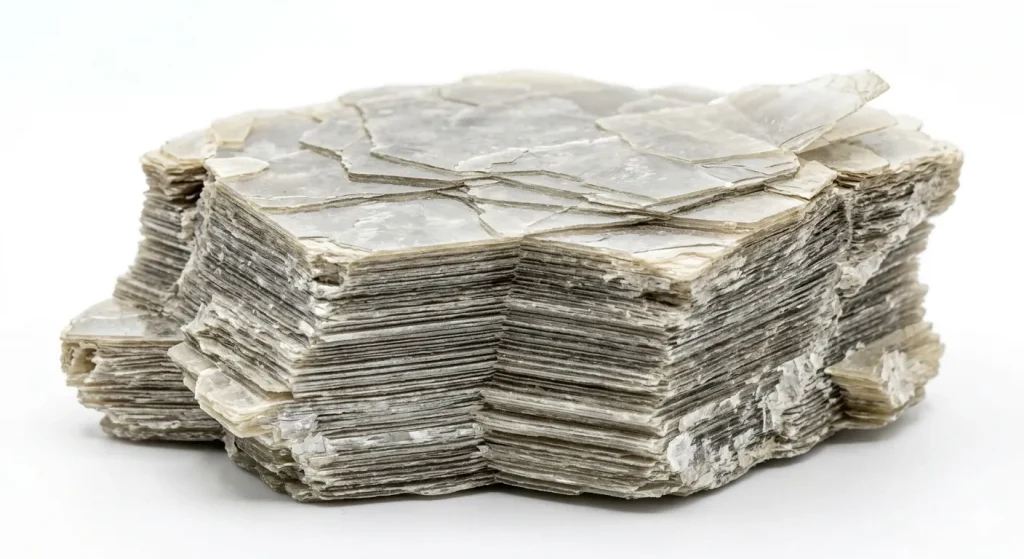
Block mica refers to the crude and unprocessed form of mica obtained from mines in thick and irregular lumps or blocks before it is sorted and then split into sheets. It is made up of mica masses, which may have some impurities, cracks, stains, and intergrowths of other minerals. Therefore, it is not immediately used for high-end purposes. Unlike sheet mica, block mica has not yet undergone the process of being sorted into sheets. It still has its natural layered properties, which make it possible for it to be used in the production of mica sheets.
The major importance of block mica is its function as a raw material for mica sheets and splitting mica, which have undergone processes like cutting, trimming, and splitting. It is used in the production of quality mica sheets if it is of high quality and scrap mica for powdering if it is of poor quality. Therefore, it is the starting material in the mica production chain, from which the quality and commercial value of mica products are determined.
Splitting Mica
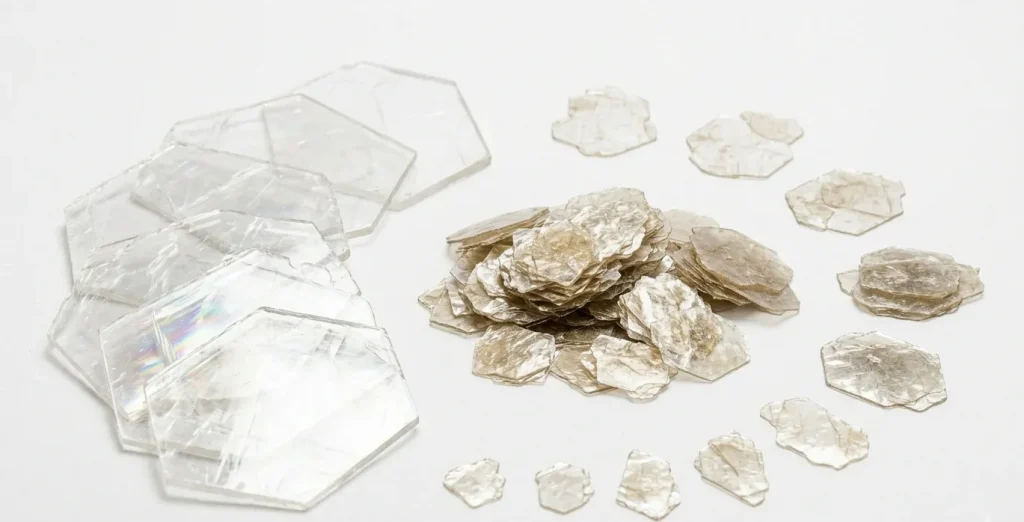
Splitting Mica is defined as the type of mica material obtained by manually or mechanically splitting block mica into very thin sheets or layers. Since the mica material has a perfect layered structure, it is possible to split it into uniform, flexible, and smooth thin layers. These thin layers are thinner than sheet mica but have good strength and insulating properties. These thin layers are not large and/or perfect enough to be used as sheet mica.
However, they are extremely useful when stacked, bonded, and/or built up. Splitting mica is characterized by good heat resistance, dielectric strength, and flexibility. This type of mica material is very useful and is employed to make various products, including mica tapes, mica papers, and built-up mica. Splitting mica is defined as an intermediate product between block mica and finished fabricated mica products. It is very useful and is employed to make various products.
Mica Scrap
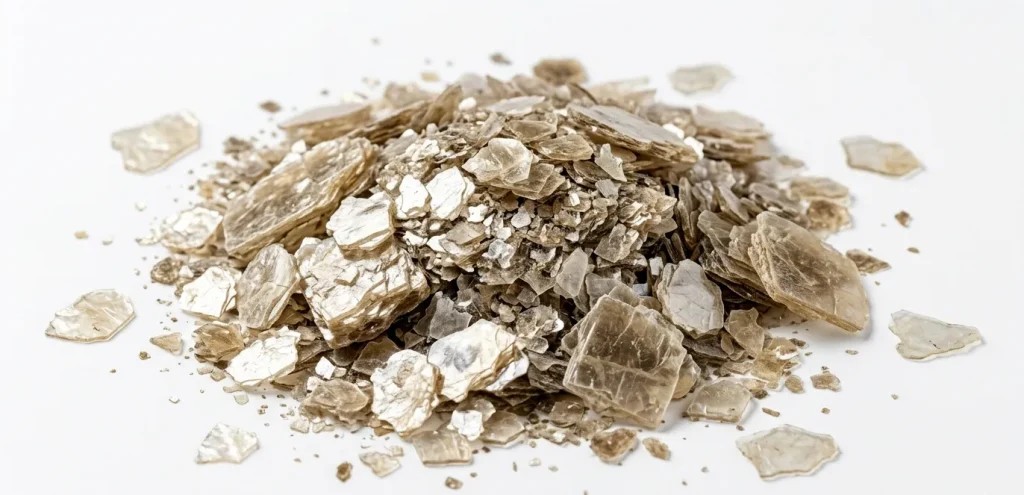
Mica scrap refers to the broken, irregular, and smaller pieces of mica produced during mining, sorting, cutting, and processing of block and sheet mica. These pieces are not large or clean enough to be used as sheet or splitting mica because of cracks, uneven shapes, impurities, or small size. However, they still have essential mica properties such as heat resistance, chemical stability, and a flaky structure. Instead of being thrown away, mica scrap is an important raw material for further processing. It is mostly crushed and ground into fine mica powder or turned into mica pulp for making mica paper and other fabricated mica products.
Depending on its quality, scrap may vary in size, cleanliness, and mineral makeup, which influences its end use. It is widely used in industries like paints, coatings, plastics, rubber, cosmetics, and construction. Its shimmering appearance, reinforcing ability, and insulating properties add value to these products. In simple terms, mica scrap is a low-cost but highly useful by-product of mica processing that plays a major role in bulk industrial applications.
Ground Mica (Mica Powder)
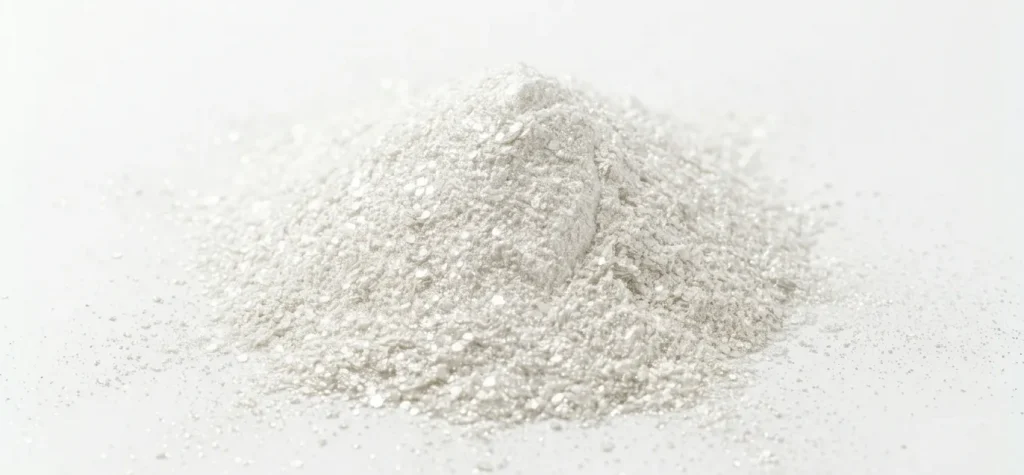
Ground mica (mica powder) is a finely processed form of mica. It is made by crushing and grinding mica scrap or low-grade mica into small, flaky particles. Even though it is in powder form, it keeps mica’s natural qualities like shimmer, chemical stability, heat resistance, and insulating ability. Depending on how it is processed, it is mainly classified as either dry ground mica, which is mechanically ground and has more irregular particles, or wet ground mica, which is processed with water, resulting in smoother, more uniform flakes that have better sheen. The particle size can vary from coarse flakes to very fine powder, based on the intended use.
Ground mica is widely used in different industries due to its lubricating, reinforcing, and reflective properties. It improves surface finish, reduces cracking, and increases durability. It is commonly found in paints and coatings for gloss and corrosion resistance, cosmetics for shimmer and smooth texture, plastics and rubber for strength and stability, construction materials, and drilling fluids. Overall, ground mica is a cost-effective and versatile material sourced from mica scrap and suitable for large-volume applications.
Fabricated / Built-up Mica
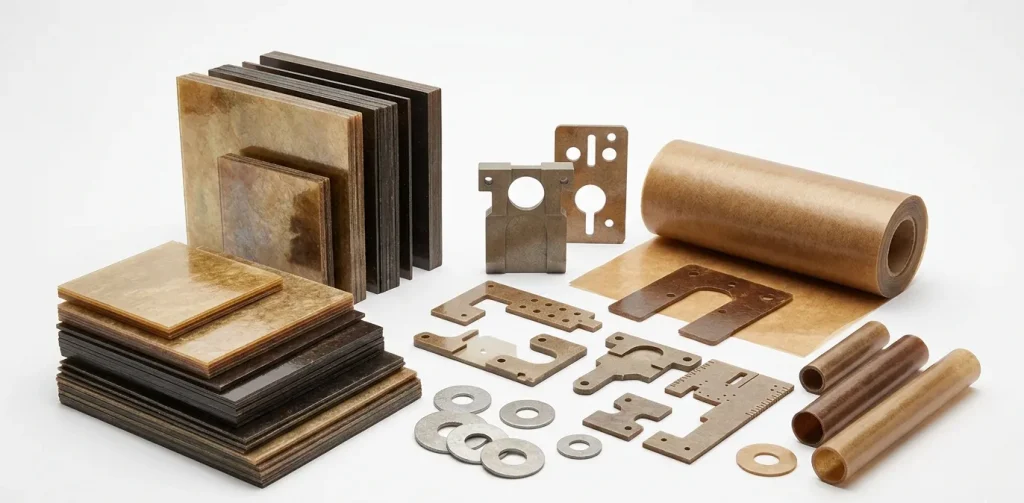
Fabricated or built-up mica refers to engineered mica products made by bonding small pieces, splittings, or mica paper together using heat-resistant binders to create sheets, plates, or specific shapes. Large natural sheet mica is rare and expensive, so this method lets manufacturers create uniform, defect-free mica materials with controlled thickness and size. The final product keeps the key properties of natural mica, like excellent electrical insulation, high heat resistance, and mechanical strength, while offering better consistency and reliability for industrial use.
Fabricated mica comes in various forms, including mica sheets, tubes, washers, and insulating components, depending on application needs. It is commonly used in electrical equipment, thermal insulation systems, heating elements, and fire-resistant cables, where durability and performance at high temperature and voltage are crucial. In simple terms, built-up mica is a processed and standardized alternative to natural sheet mica, made to meet modern industrial needs.
Mica Paper
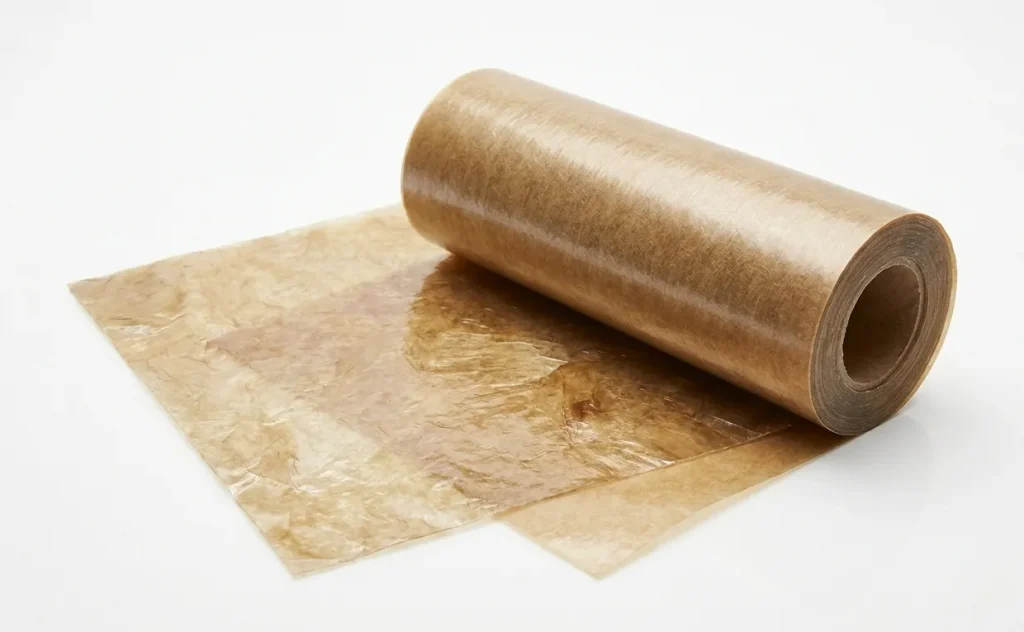
Mica paper is a manufactured form of mica made by processing mica scrap into a pulp and then forming it into thin, flexible sheets—similar to how paper is produced. In this process, mica is finely ground, mixed with water to create a slurry, and then laid into sheets, which are later dried and often bonded with resins or binders to improve strength and durability. Unlike natural sheet mica, mica paper has a uniform thickness, smooth surface, and consistent quality, making it highly reliable for industrial applications. It retains important properties of mica such as excellent heat resistance, fire resistance, electrical insulation, and chemical stability
Although its mechanical strength is enhanced through reinforcement. Mica paper is widely used in the production of mica tapes, fire-resistant cables, electrical insulation systems, and thermal barriers, especially in applications where safety under high temperature and flame conditions is critical. In simple terms, mica paper is a cost-effective, engineered alternative to natural mica sheets, designed for large-scale industrial use with consistent performance.